
Specialist urological care
Assessment and treatment for stones, prostate and urinary symptoms.
URO-ONCOLOGY
Serious symptoms deserve a serious but calm work-up, especially when blood, blockage, or a suspicious scan needs proper interpretation.

OVERVIEW
Urological cancers include problems of the kidney, bladder, prostate, and testis. Most symptoms do not turn out to be cancer, but the purpose of evaluation is not to guess; it is to sort out ordinary causes from suspicious findings in a structured way.
Blood in the urine, a persistent urinary blockage, a growing lump, unexplained weight change, or a report describing a lesion in the kidney or bladder should not be brushed away with generic reassurance. At the same time, not every abnormal scan means cancer. The task is careful interpretation, not panic.
Dr. Kumar Saurav explains the likely source of concern, which tests are actually useful, and when tissue diagnosis or referral becomes necessary. Patients from Civil Lines and Model Town often arrive with a stack of partial reports and no plain-English explanation of what is being looked for. That is the first problem to solve.
The tone of the visit matters. Cancer evaluation should be direct, not dramatic. You deserve honesty about risk, the difference between a suspicion and a diagnosis, and the next step if the findings are benign, uncertain, or clearly concerning.

WARNING SIGNS
Serious symptoms deserve a serious but calm work-up, especially when blood, blockage, or a suspicious scan needs proper interpretation.
If a report has left you worried but not informed, bring the original scan and any biopsy or endoscopy notes. A clear next step is more useful than trying to interpret cancer wording alone.
CAUSES & RISK FACTORS
Cancer risk varies by organ and age, with smoking, chronic irritation, and family history relevant in some conditions
A suspicious lesion on imaging that needs better definition Unexplained bleeding or a lump requiring tissue diagnosis Some findings are benign, but the work-up is needed to prove that safely
Cancer risk varies by organ and age, with smoking, chronic irritation, and family history relevant in some conditions
A suspicious lesion on imaging that needs better definition
Unexplained bleeding or a lump requiring tissue diagnosis
Some findings are benign, but the work-up is needed to prove that safely
DIAGNOSIS
Diagnosis may involve examination, urine tests, blood work, ultrasound, CT or MRI when appropriate, and endoscopic review when a lesion needs direct inspection.
If a mass or suspicious area is found, tissue diagnosis may be required before any definitive treatment is discussed.
The sequence of tests is chosen to avoid both over-testing and dangerous delay, especially when a scan finding needs action rather than observation.
TREATMENT OPTIONS
Treatment depends on the organ and stage, ranging from surveillance for uncertain findings to surgery, endoscopic intervention, or oncology referral when cancer is confirmed.
Symptom control and urinary drainage are prioritized when blockage or bleeding creates immediate risk.
The treatment plan should always be stage-specific and explained in plain terms so the patient knows what is confirmed, what is suspected, and what still needs proof.
Treatment depends on the organ and stage, ranging from surveillance for uncertain findings to surgery, endoscopic intervention, or oncology referral when cancer is confirmed.
Symptom control and urinary drainage are prioritized when blockage or bleeding creates immediate risk.
The treatment plan should always be stage-specific and explained in plain terms so the patient knows what is confirmed, what is suspected, and what still needs proof.
BENEFITS
Dr. Kumar Saurav is a Consultant Urologist & Andrologist consulting at Sant Parmanand Hospital and Tirath Ram Shah Hospital (Civil Lines) and a Model Town clinic.
The visit starts with your story and goals—relief, stone clearance, urinary control, or sexual health—not a pre-bundled list of tests.
Plans are explained in everyday language so you can decide with your family and return with the right questions.
Follow-up timing is written clearly so you know when observation is safe and when you should come sooner.
RECOVERY & FOLLOW-UP
Recovery depends on the exact diagnosis and procedure, so aftercare is individualized rather than copied from a generic leaflet.
Follow-up appointments are essential because pathology results, imaging, and symptom changes often determine the next step.
Patients are told clearly which warning signs need urgent return, especially if bleeding, fever, or urinary blockage reappears.
Recovery depends on the exact diagnosis and procedure, so aftercare is individualized rather than copied from a generic leaflet.
Follow-up appointments are essential because pathology results, imaging, and symptom changes often determine the next step.
Patients are told clearly which warning signs need urgent return, especially if bleeding, fever, or urinary blockage reappears.
WHEN TO CONSULT
If any of these start, seek care before the next scheduled OPD day.
Book urgently for visible blood in urine, a testicular lump, or a scan that mentions a suspicious lesion
WHY CHOOSE DR. KUMAR SAURAV
Consultations start with your history and symptoms, followed by focused assessment, indicated tests, and clear treatment plans.
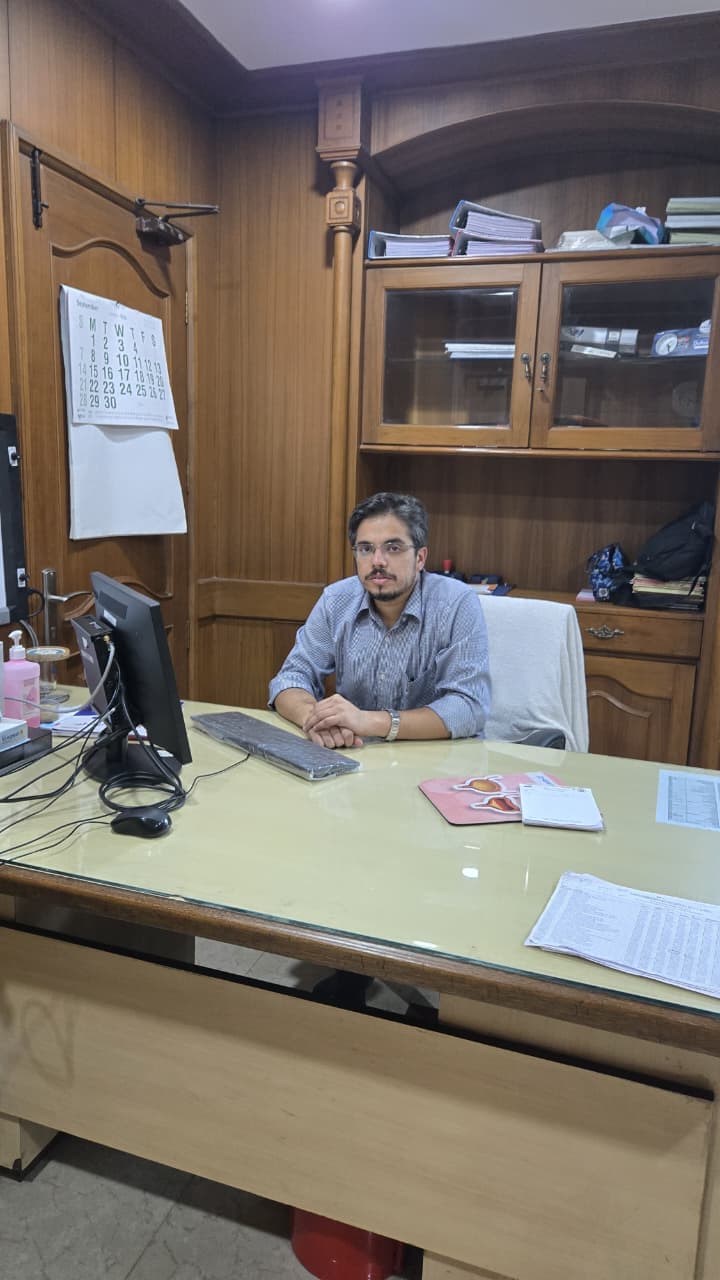
Dr. Kumar Saurav
Consultant Urologist & Andrologist
Assessment and treatment for stones, prostate and urinary symptoms.
Symptoms, history and reports reviewed carefully.
Relevant options and next steps explained clearly.
Focused evaluation and treatment when indicated.
Practical care for prostate and urinary concerns.
Review dates, guidance and warning signs.
Understand
History & symptoms
Assess
Examination & tests
Plan
Options & next steps
Follow-up
Review & guidance
Civil Lines · Model Town · Tirath Ram Shah Hospital
RELATED TREATMENTS
Explore related options that are often discussed together during consultation.
 TREATMENT
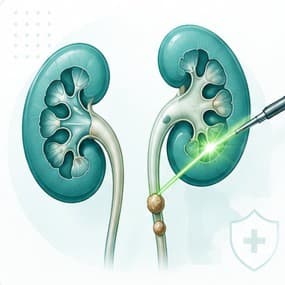
Modern stone clearance for painful blockage, repeated colic, or stones that are too stubborn to pass with water and hope alone.
Learn more TREATMENT
Definitive relief for urinary blockage from an enlarged prostate, discussed with the risks and recovery your age and health deserve.
Learn more TREATMENT
A full review of sexual health, fertility, hormones, and urinary concerns in one confidential conversation.
Learn moreFAQS
Answers to common clinical and practical questions about this condition or treatment.
No, but it always deserves a proper explanation. Stones, infection, prostate issues, and other benign causes are common, yet cancer must be ruled out when the pattern or imaging makes that necessary.
Ready when you are
Book online, call the clinic desk, or WhatsApp your preferred day. Confirm Civil Lines, Model Town, or Tirath Ram Shah hours before you travel.
Clinic timings and full addresses are listed on the Locations page.