
Specialist urological care
Assessment and treatment for stones, prostate and urinary symptoms.
KIDNEY STONES
Retrograde intrarenal surgery for stones inside the kidney when flexible endoscopy is the most efficient path to clearance.
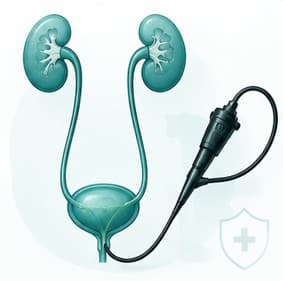
OVERVIEW
RIRS, or retrograde intrarenal surgery, is a flexible endoscopic approach used to reach stones inside the kidney through the natural urinary passage. It is often discussed when a stone is too large for simple observation, too awkward for easy passage, or positioned in a place where laser fragmentation offers a practical route to clearance.
Patients often hear the term after a scan has shown a stone sitting quietly in the kidney but already causing pain, repeated infection, or repeated anxiety. The procedure is not a generic upgrade; it is chosen because the stone location and shape make a minimally invasive internal approach more sensible than waiting for a problem to worsen.
Dr. Kumar Saurav explains RIRS in everyday language: a flexible instrument reaches the kidney, the stone is broken with laser energy, and the fragments are allowed to clear or removed depending on the case. The focus is on accurate planning, safe access, and reducing the chance of repeat colic, not on making the procedure sound more dramatic than it is.
For North Delhi patients, especially those juggling work travel, family duties, or repeated episodes of pain, RIRS can be a practical solution when the stone burden needs to be addressed without a large incision and without turning the whole process into a prolonged hospital story.
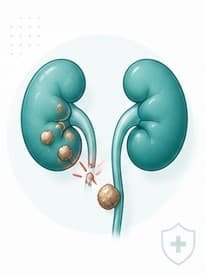
WARNING SIGNS
Retrograde intrarenal surgery for stones inside the kidney when flexible endoscopy is the most efficient path to clearance.
If your kidney stone report has been sitting on a shelf while the pain keeps returning, bring it in. A careful RIRS discussion can turn a vague scan finding into a clear, timed plan.
CAUSES & RISK FACTORS
Stone formation inside the kidney from concentrated urine and mineral imbalance
Prior stone disease, family tendency, or metabolic risk Kidney stones that remain trapped in a calyx or collecting area Anatomical factors that make spontaneous clearance unlikely
Stone formation inside the kidney from concentrated urine and mineral imbalance
Prior stone disease, family tendency, or metabolic risk
Kidney stones that remain trapped in a calyx or collecting area
Anatomical factors that make spontaneous clearance unlikely
DIAGNOSIS
RIRS planning starts with imaging: size, location, stone density, and the appearance of the collecting system guide the decision.
Urine and blood tests check whether infection or kidney stress is present and whether the patient is stable for an elective endoscopic procedure.
The final decision weighs stone factors against your health, previous treatments, and the likelihood of getting the stone cleared in one sensible session.
TREATMENT OPTIONS
If the stone is small and the kidney is draining well, observation with preventive advice may still be reasonable.
When definitive clearance is needed, RIRS allows laser fragmentation through the urinary tract without a cut on the body.
After treatment, prevention is not optional: fluid habits, stone analysis when available, and follow-up reduce repeat stone formation.
If the stone is small and the kidney is draining well, observation with preventive advice may still be reasonable.
When definitive clearance is needed, RIRS allows laser fragmentation through the urinary tract without a cut on the body.
After treatment, prevention is not optional: fluid habits, stone analysis when available, and follow-up reduce repeat stone formation.
BENEFITS
Dr. Kumar Saurav is a Consultant Urologist & Andrologist consulting at Sant Parmanand Hospital and Tirath Ram Shah Hospital (Civil Lines) and a Model Town clinic.
The visit starts with your story and goals—relief, stone clearance, urinary control, or sexual health—not a pre-bundled list of tests.
Plans are explained in everyday language so you can decide with your family and return with the right questions.
Follow-up timing is written clearly so you know when observation is safe and when you should come sooner.
RECOVERY & FOLLOW-UP
Mild urinary burning, blood-tinged urine, or temporary frequency can happen as the ureter and kidney settle.
If a stent is used, you will be told what to expect and when it should be removed or reviewed.
The recovery plan ends only when the stone burden is cleared and the reason for forming stones has been addressed.
Mild urinary burning, blood-tinged urine, or temporary frequency can happen as the ureter and kidney settle.
If a stent is used, you will be told what to expect and when it should be removed or reviewed.
The recovery plan ends only when the stone burden is cleared and the reason for forming stones has been addressed.
WHEN TO CONSULT
If any of these start, seek care before the next scheduled OPD day.
Bring the scan if the stone has been known for some time and you want a clear next step
WHY CHOOSE DR. KUMAR SAURAV
Consultations start with your history and symptoms, followed by focused assessment, indicated tests, and clear treatment plans.
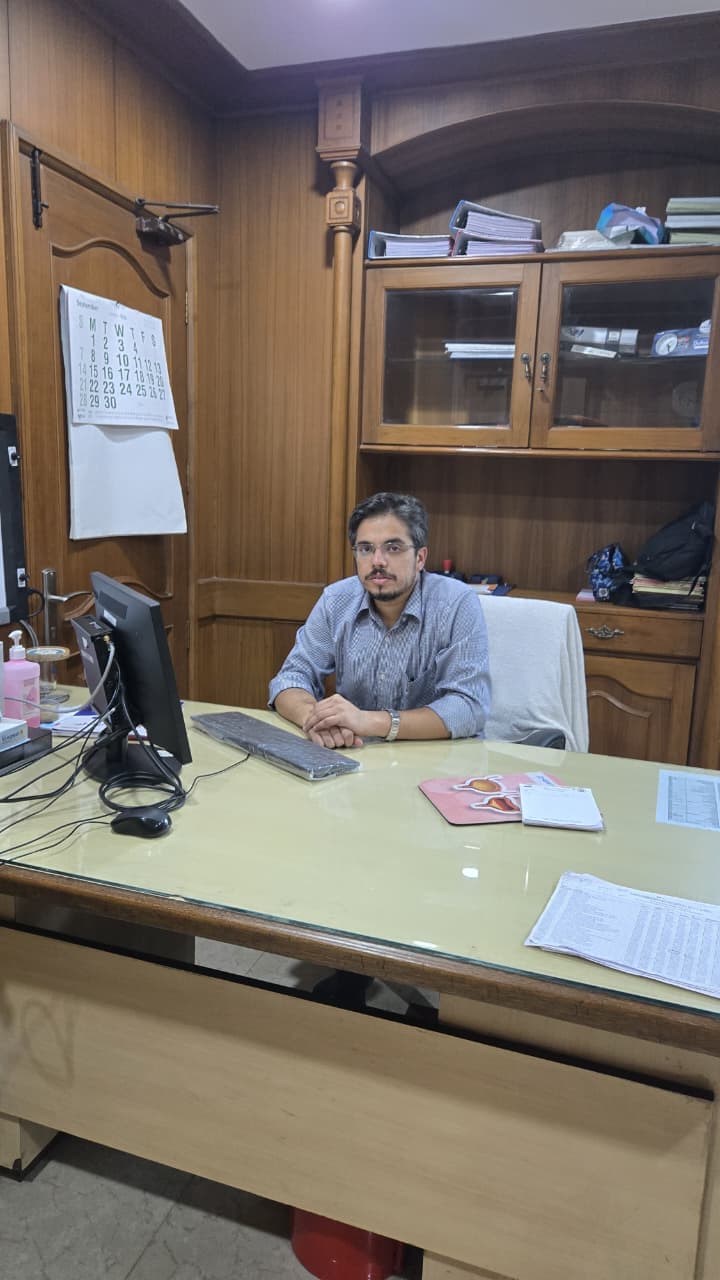
Dr. Kumar Saurav
Consultant Urologist & Andrologist
Assessment and treatment for stones, prostate and urinary symptoms.
Symptoms, history and reports reviewed carefully.
Relevant options and next steps explained clearly.
Focused evaluation and treatment when indicated.
Practical care for prostate and urinary concerns.
Review dates, guidance and warning signs.
Understand
History & symptoms
Assess
Examination & tests
Plan
Options & next steps
Follow-up
Review & guidance
Civil Lines · Model Town · Tirath Ram Shah Hospital
GOOGLE REVIEW
Shared on Google by a real patient of Dr. Kumar Saurav.
“Dr. Kumar Saurav removed my kidney stone through RIRS without any cut or scar. I was discharged the next day and recovered quickly.”
RELATED TREATMENTS
Explore related options that are often discussed together during consultation.
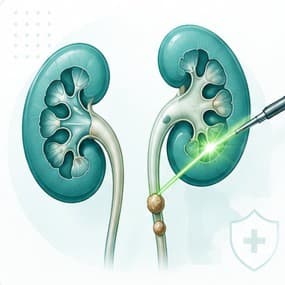 TREATMENT
Modern stone clearance for painful blockage, repeated colic, or stones that are too stubborn to pass with water and hope alone.
Learn more TREATMENT
Serious symptoms deserve a serious but calm work-up, especially when blood, blockage, or a suspicious scan needs proper interpretation.
Learn more TREATMENT
Fast, sensible treatment for burning, urgency, and recurring infection, with attention to the reason it keeps coming back.
Learn moreFAQS
Answers to common clinical and practical questions about this condition or treatment.
It is minimally invasive compared with open surgery, but it is still a planned procedure that needs proper imaging, urine testing, and aftercare. The purpose is to treat the stone decisively while keeping the approach as tissue-sparing as possible.
Ready when you are
Book online, call the clinic desk, or WhatsApp your preferred day. Confirm Civil Lines, Model Town, or Tirath Ram Shah hours before you travel.
Clinic timings and full addresses are listed on the Locations page.